SHIBUYA PARCO ART WEEK 2023
p.§.
2023.9.18(mon).19.(tue)
SHIBUYA PARCO
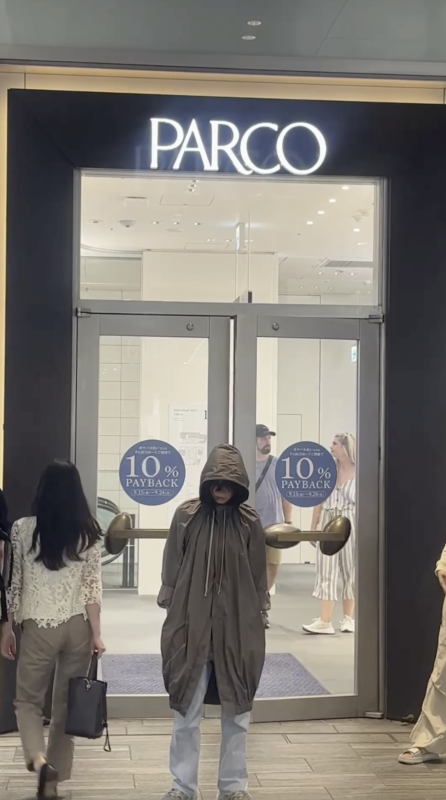
p.§. (pronounced “P.S.”) is a one-hour mixed-media performance that treats the entire SHIBUYA PARCO building—from B2F to the 10th floor, including backstage areas—as well as the surrounding city of Shibuya as a single theater.
The project began from two points of reference: an episode in which PARCO’s founder envisioned creating something like a “castle with a theater” in postwar Shibuya, and the theme of SHIBUYA PARCO ART WEEK 2023, “Performing Arts.” Rather than staging a work inside an existing theater within PARCO, the project took the commercial complex itself as its theatrical structure.
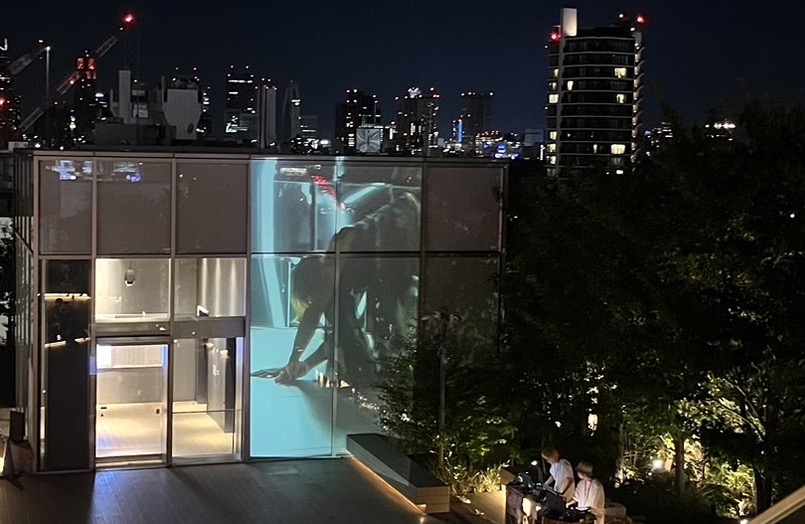
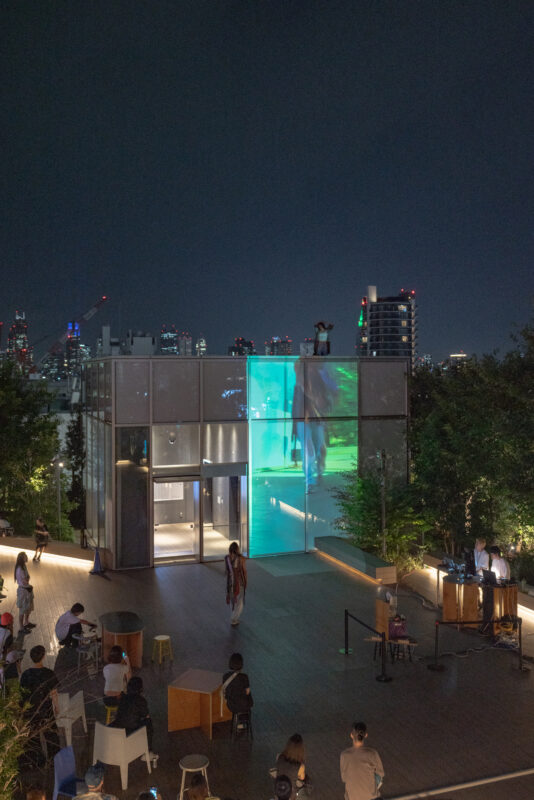
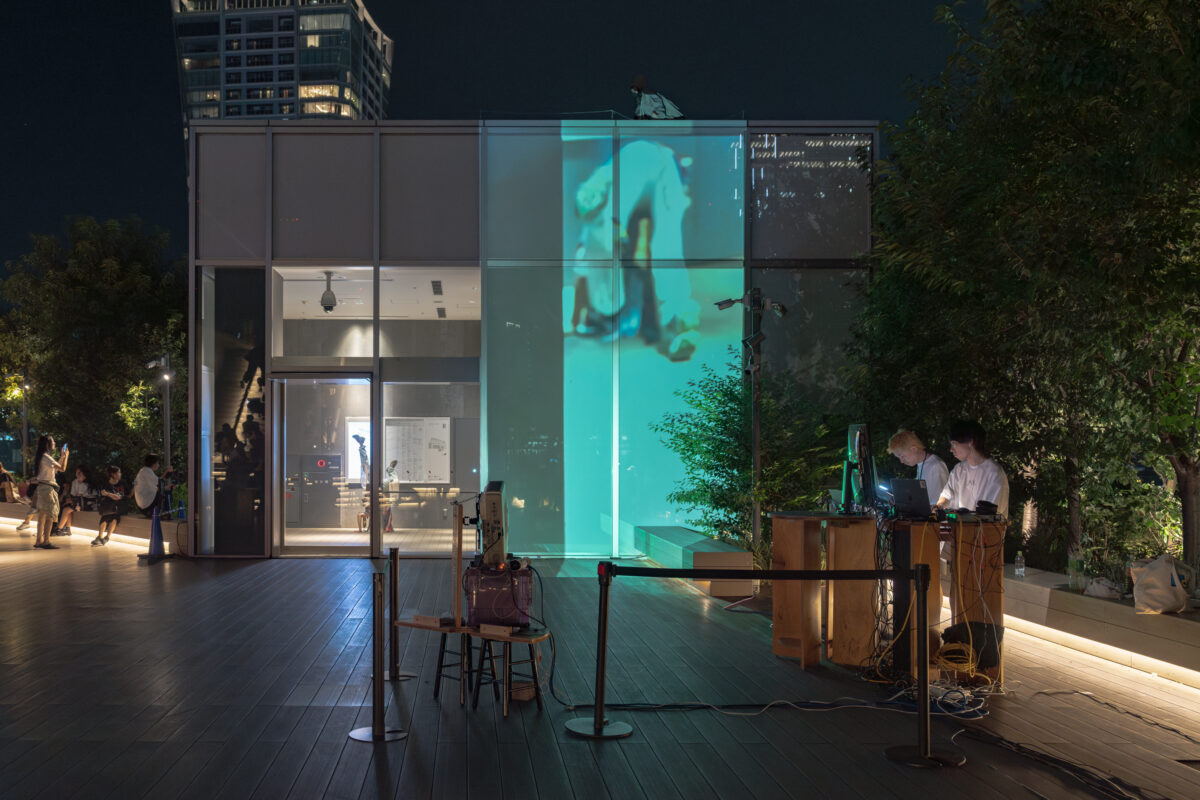
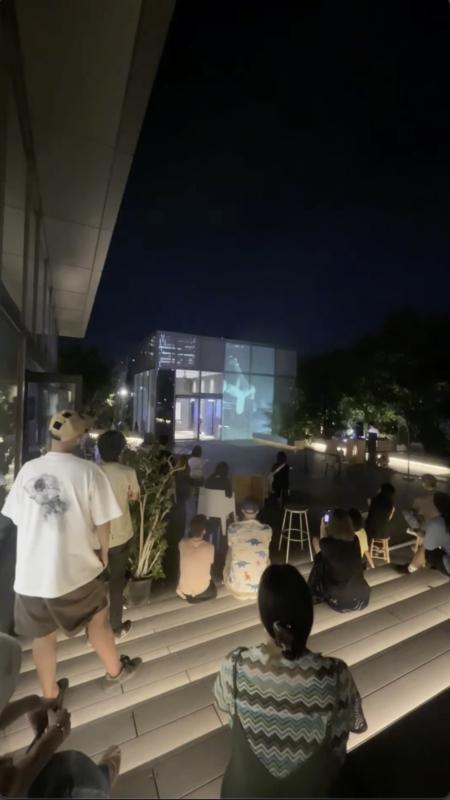
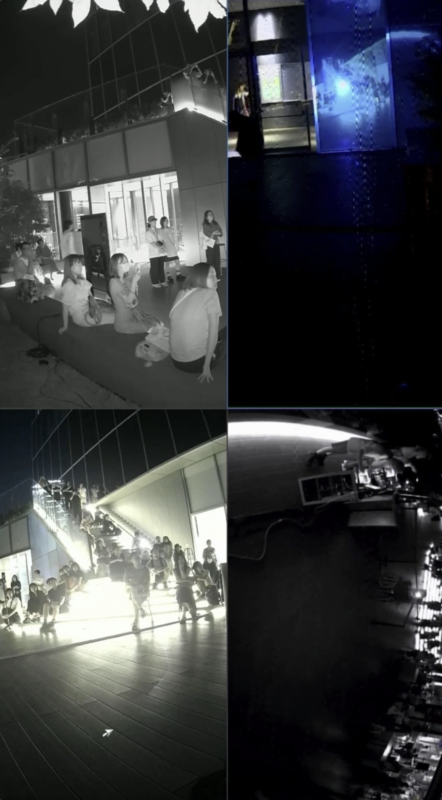
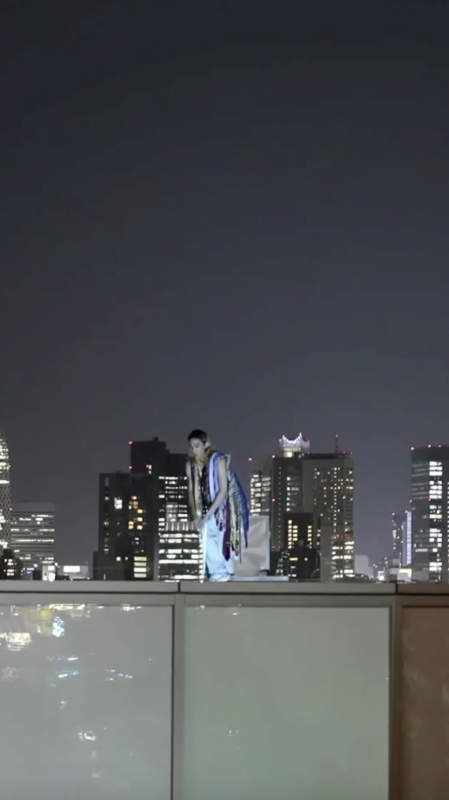
The main viewing area was the outdoor space on the 10th floor. Referencing the ancient Theatre of Dionysus in Athens, the outdoor steps were used as seating, the space in front of them as a stage, and the actual cityscape of Shibuya as the backdrop. The audience viewed the urban landscape and the performance within the same field of vision.
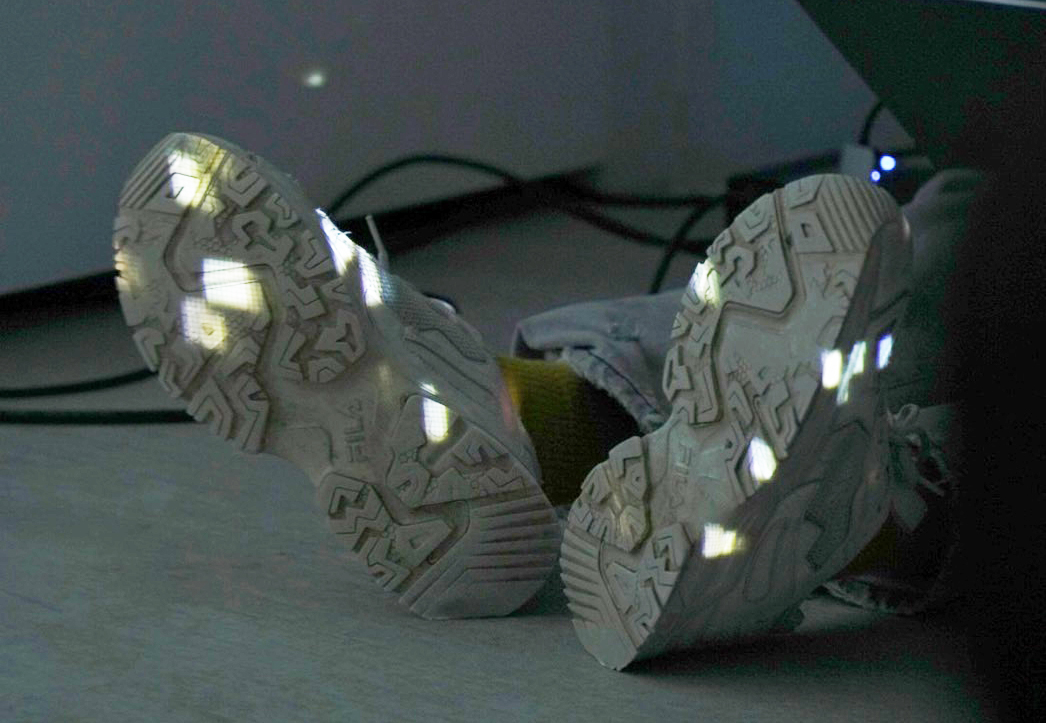
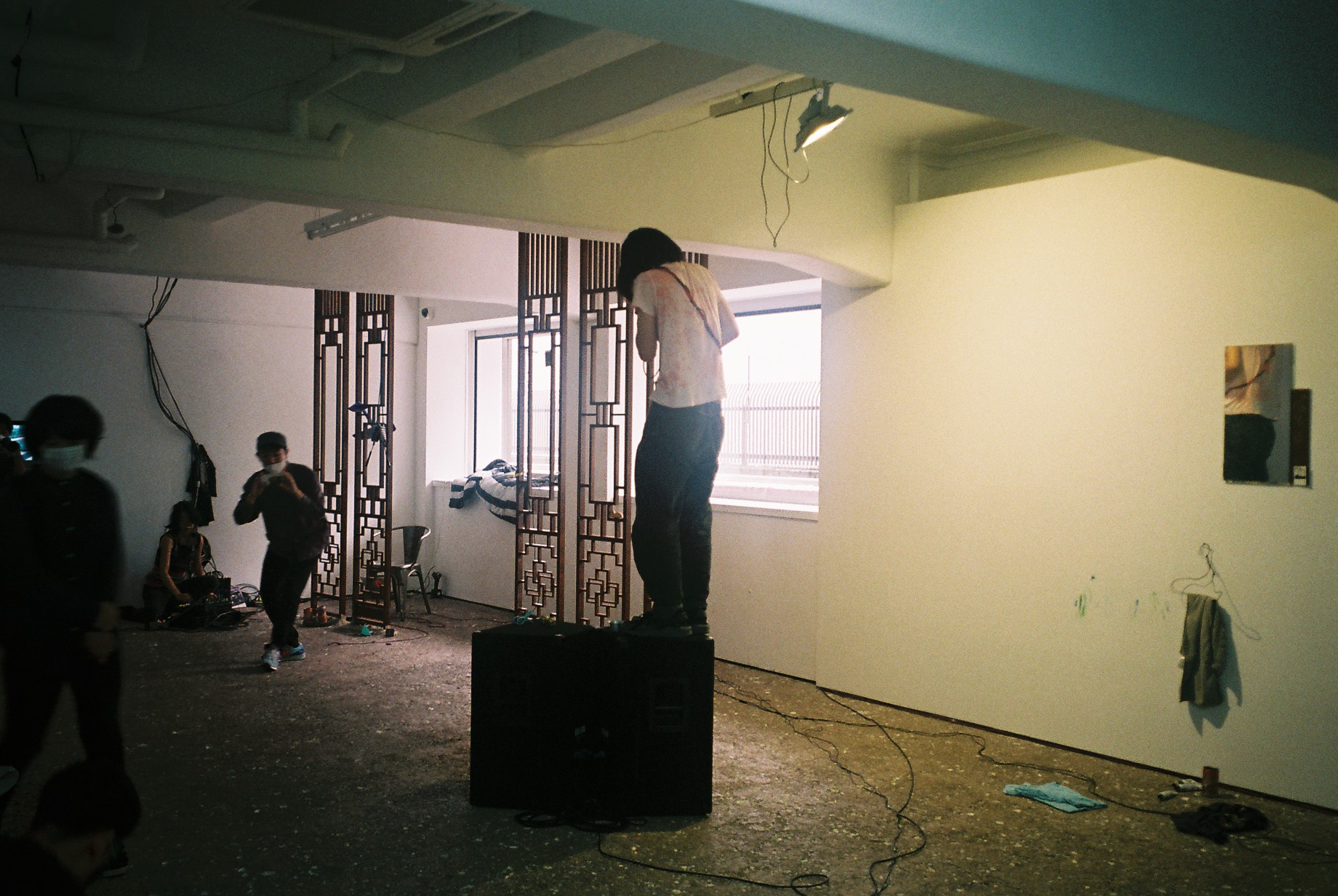
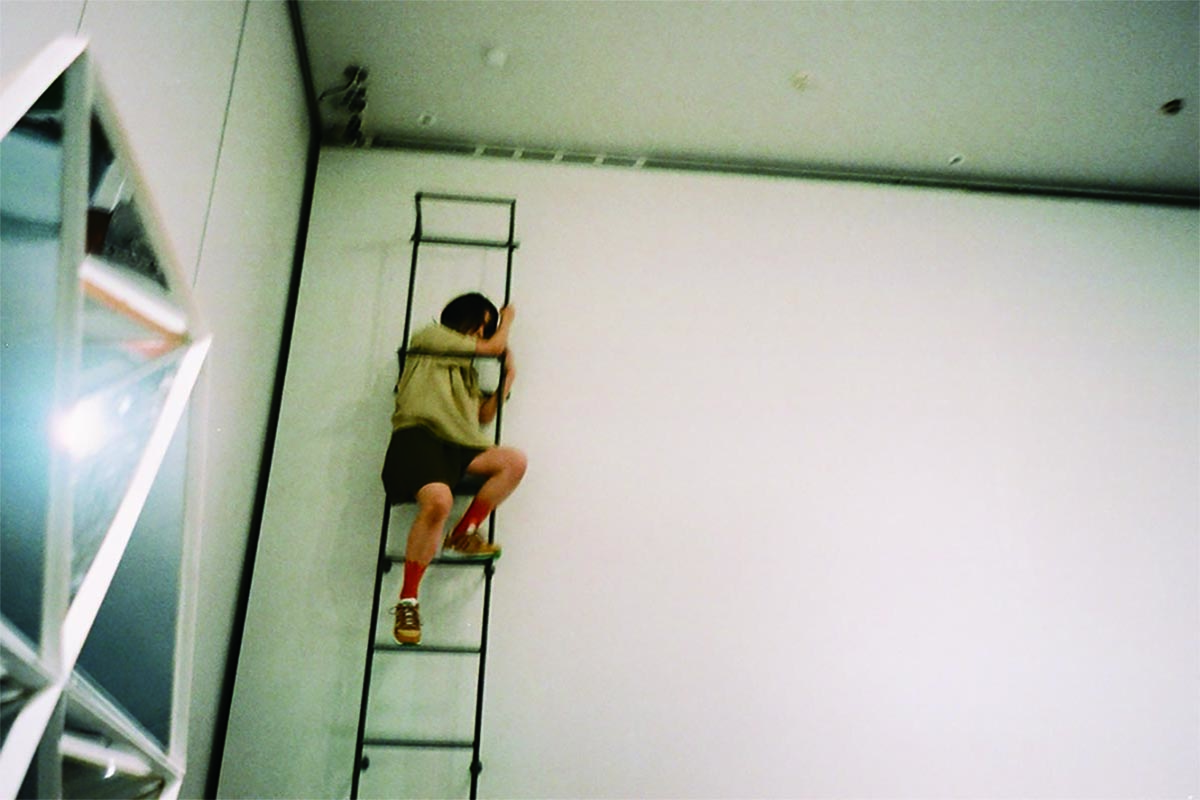
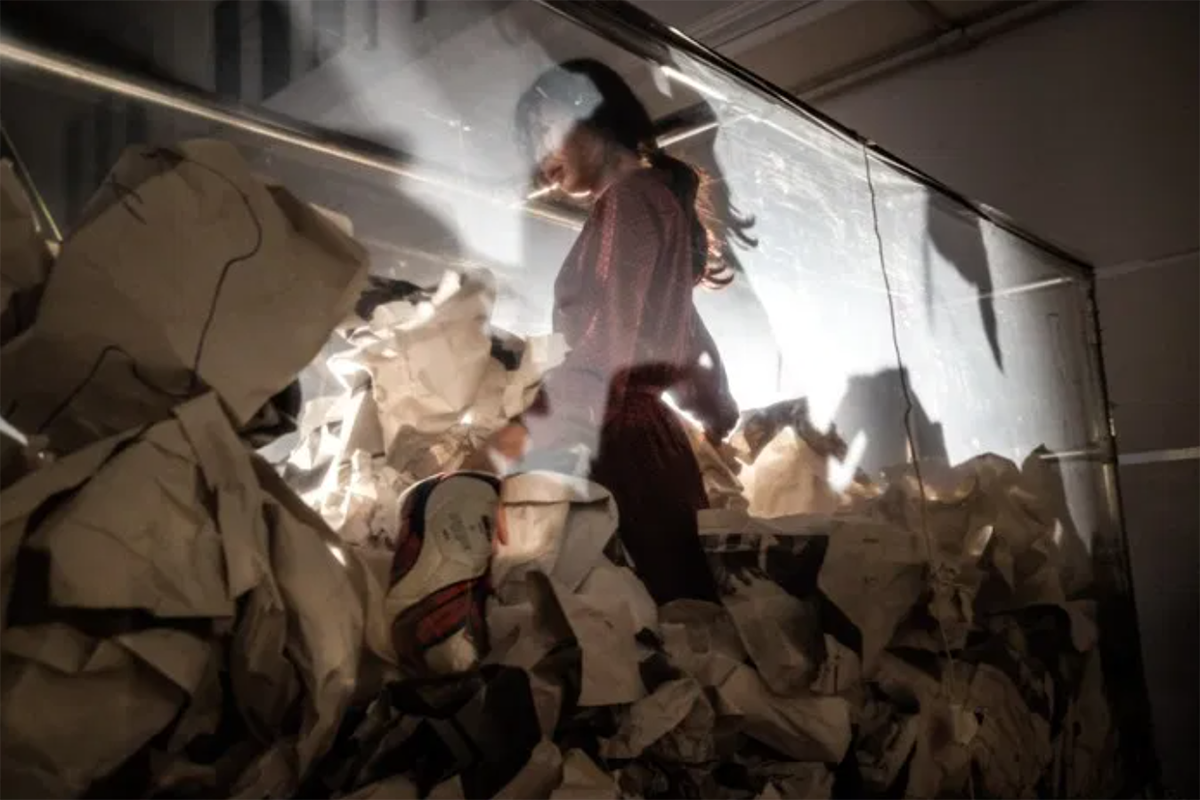
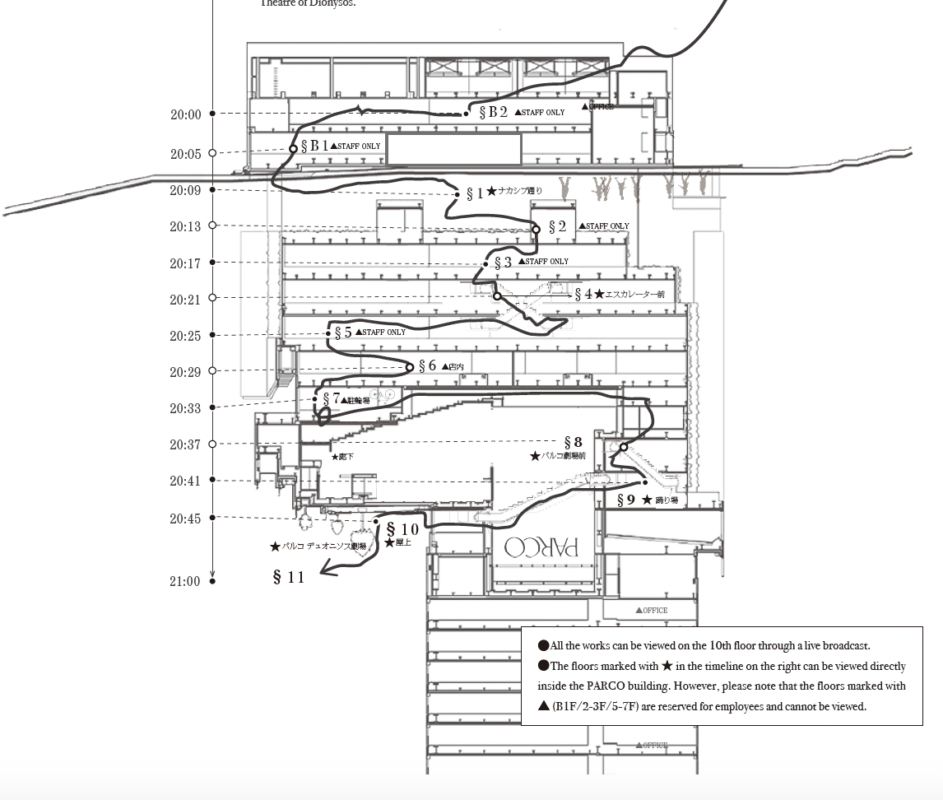
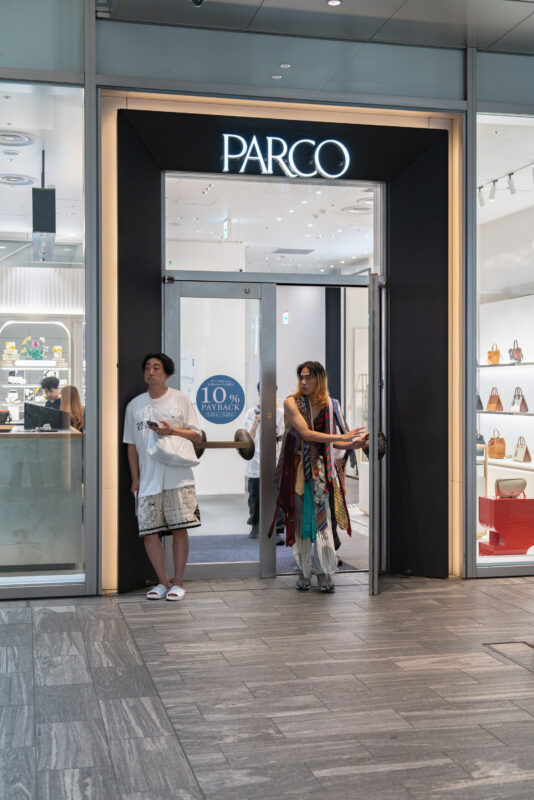
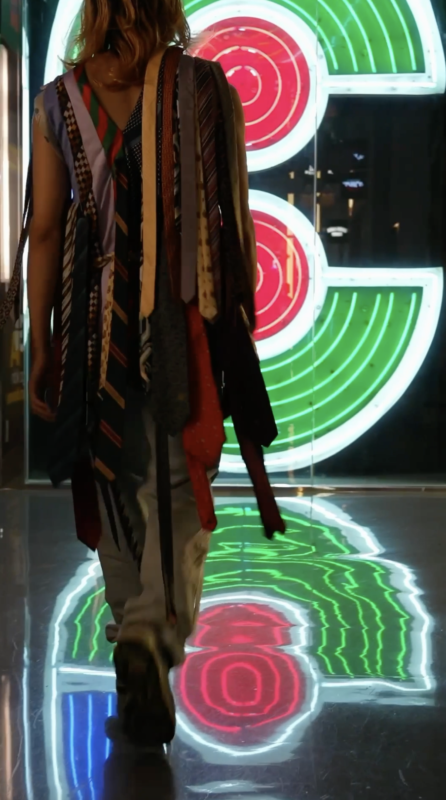
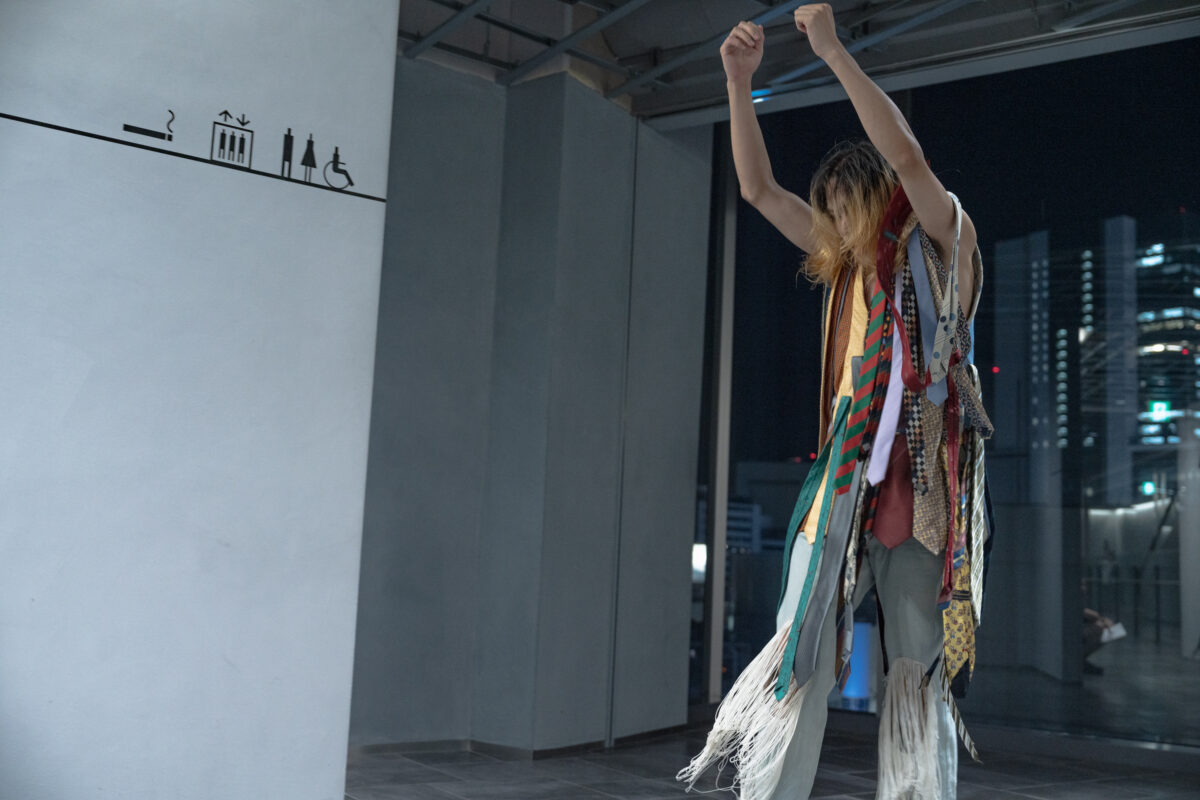
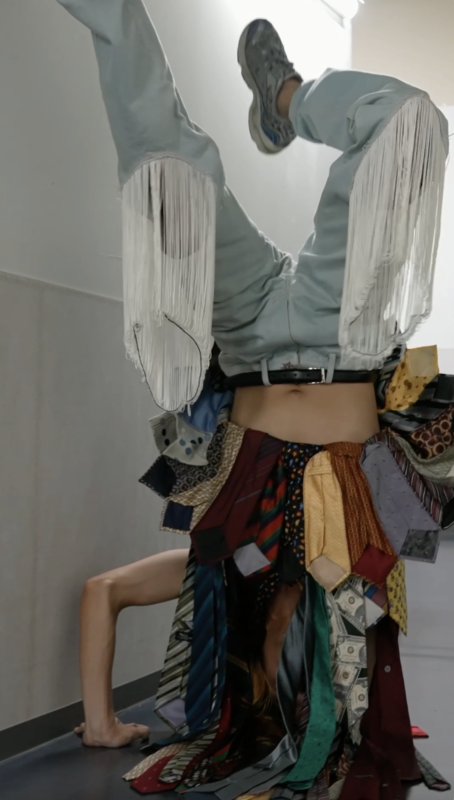
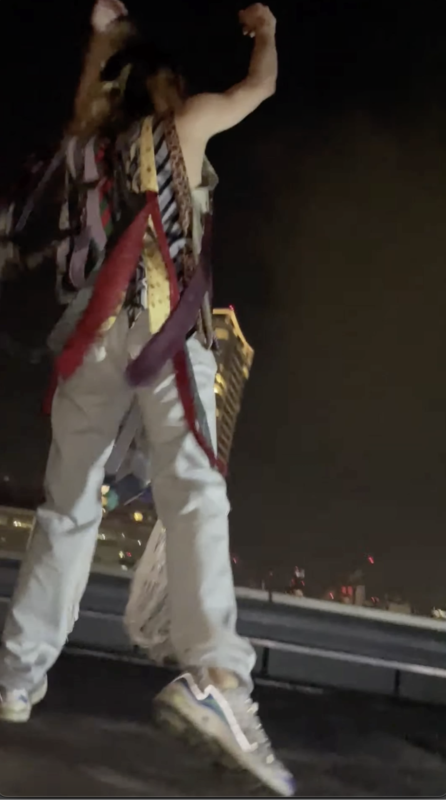
The performance began on B2F and moved upward floor by floor to the 10th floor, passing through shops, corridors, stairways, and backstage areas. The same lines and events were repeated on each floor. Because the location, surrounding people, sound, lighting, and conditions of the stores changed each time, the same sequence was repeated within a different environment.
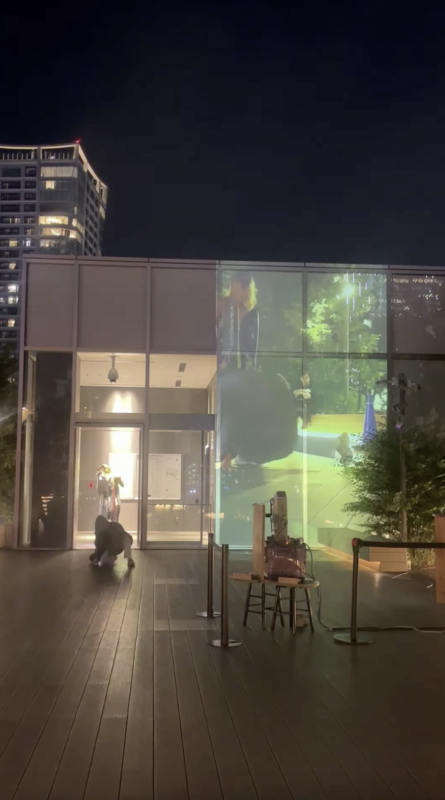
The activity on each floor was transmitted live through multiple cameras. Footage from PARCO’s security cameras was also used. Video artist Sota Suzuki mixed these multiple live feeds in real time using VJ techniques, and the resulting images were projected onto an approximately seven-meter-wide screen on the 10th floor.
The performer’s spoken lines were transmitted to the 10th floor via LINE calls. Together with environmental sounds from each floor, they were mixed in real time by sound artist Chihiro Komatsu using DJ techniques. On the 10th floor, the actual view of Shibuya, live images from inside the building, remote voices and environmental sounds, and events taking place on site were presented simultaneously.
Audience members were given a handout showing the timeline and locations of the performances on each floor. They could remain on the 10th floor and watch the live transmission, or move through the building according to the timeline to see the performance directly. As a result, the work could not be experienced from a single viewpoint, and each spectator followed a different route through it.
The project required extensive coordination with SHIBUYA PARCO and its individual tenants. Establishing a performance route from B2F to the 10th floor within an operating commercial complex, while incorporating shops, backstage areas, security cameras, and business hours, became part of the structure of the work itself.
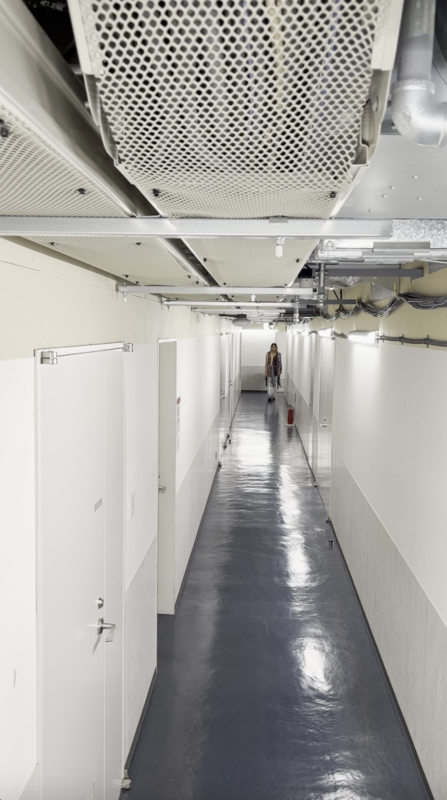
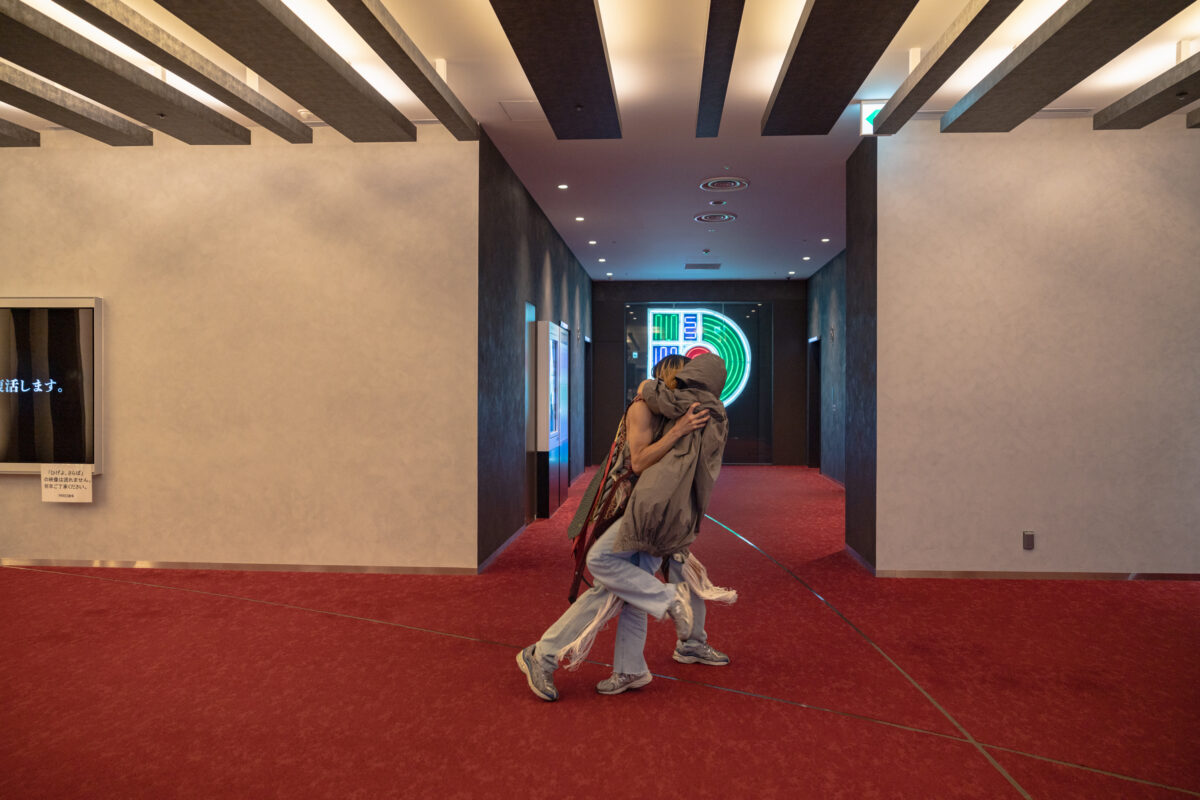
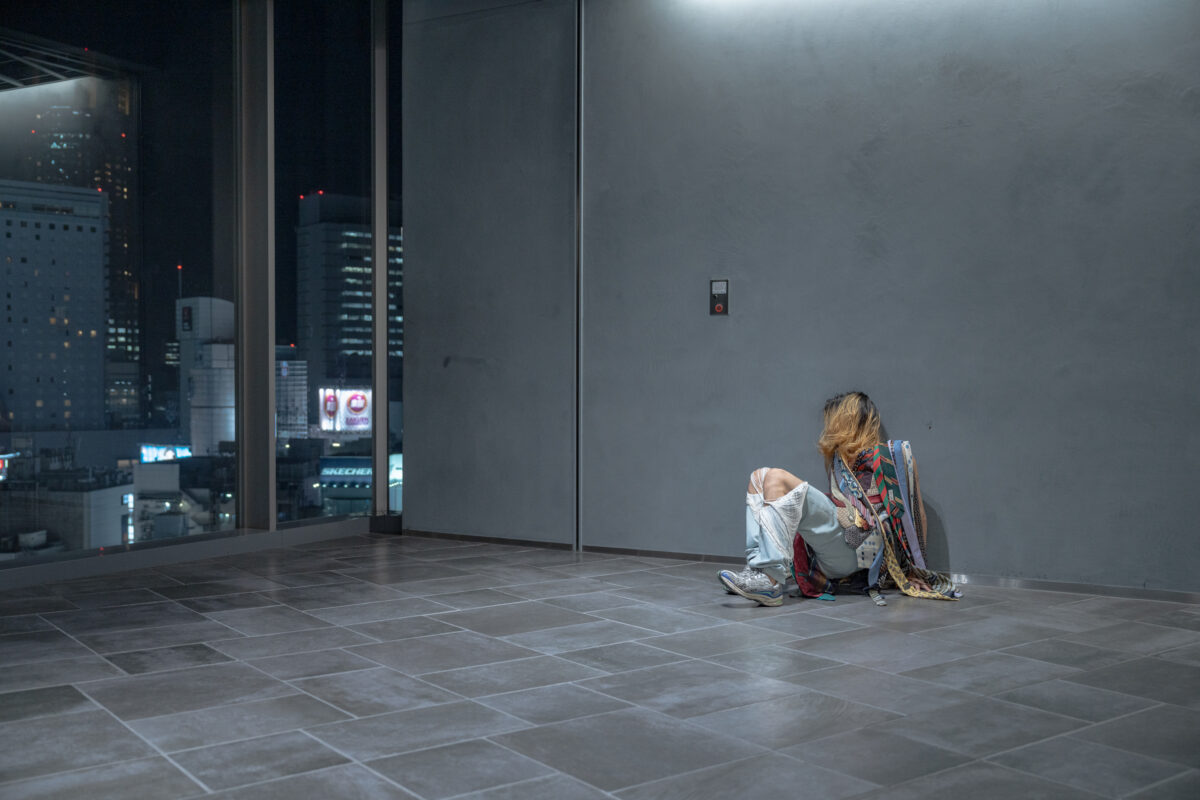
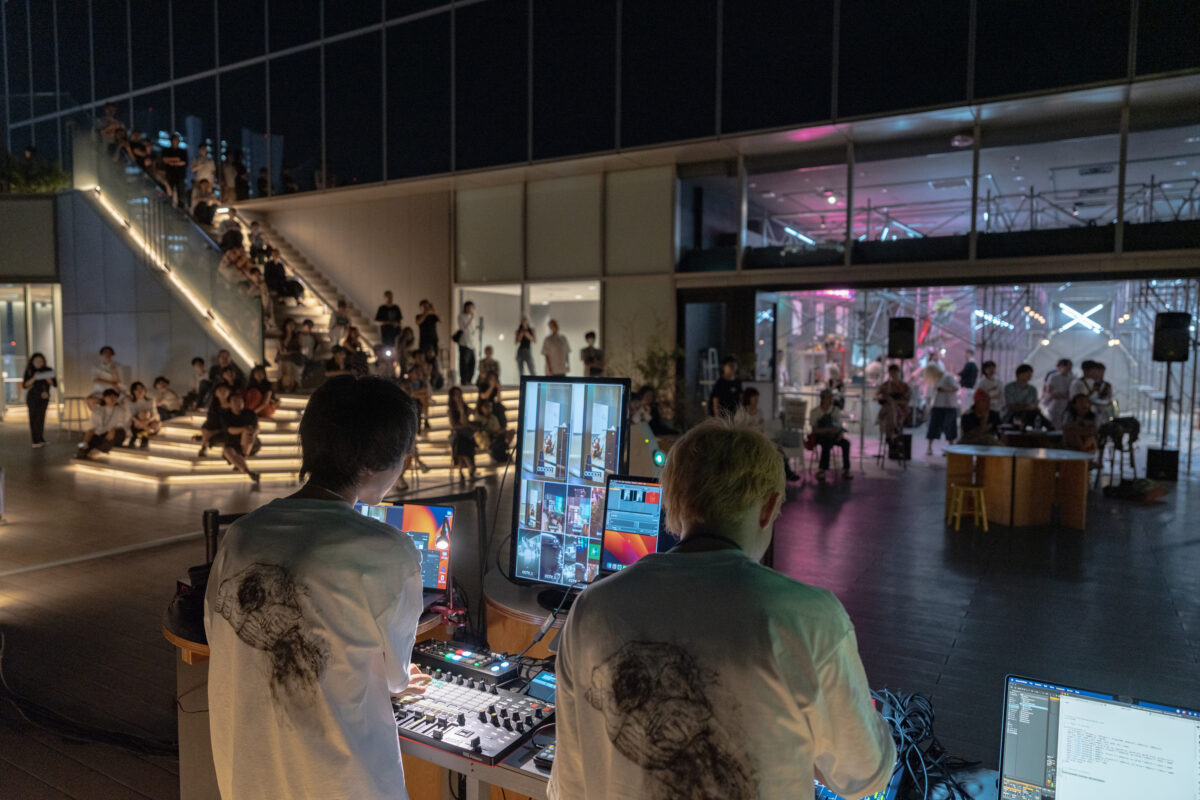
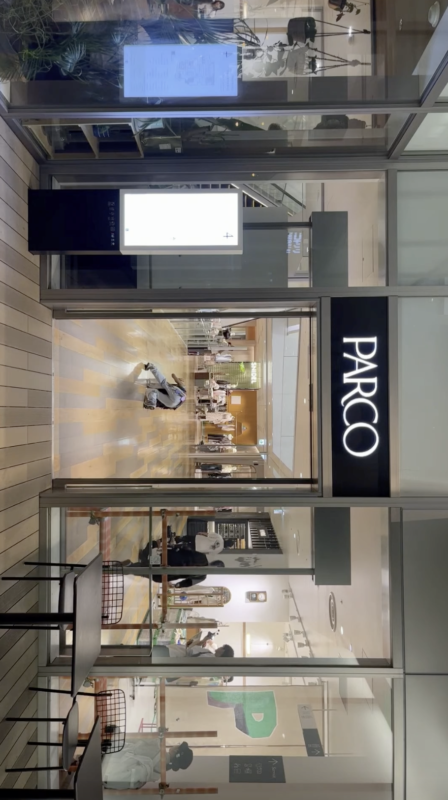
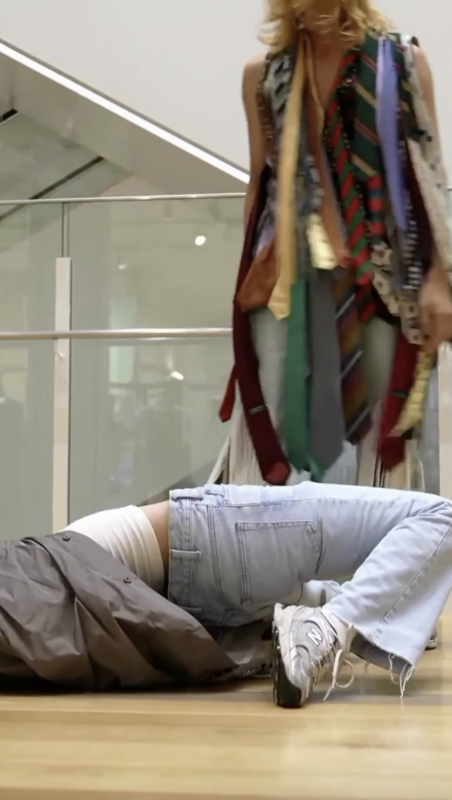
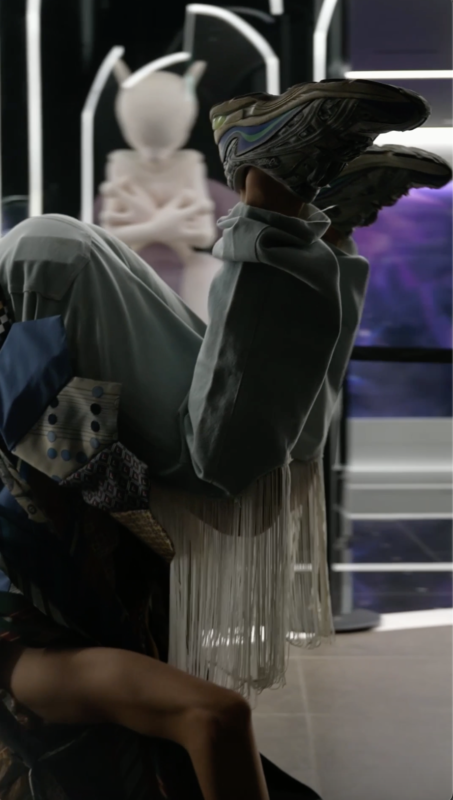
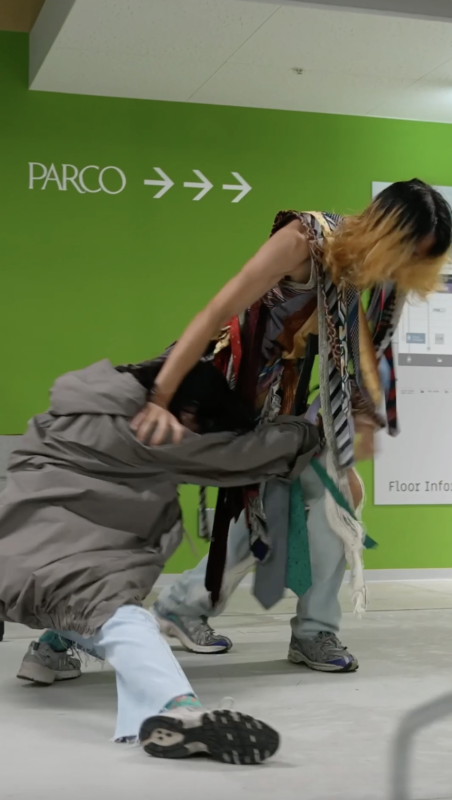
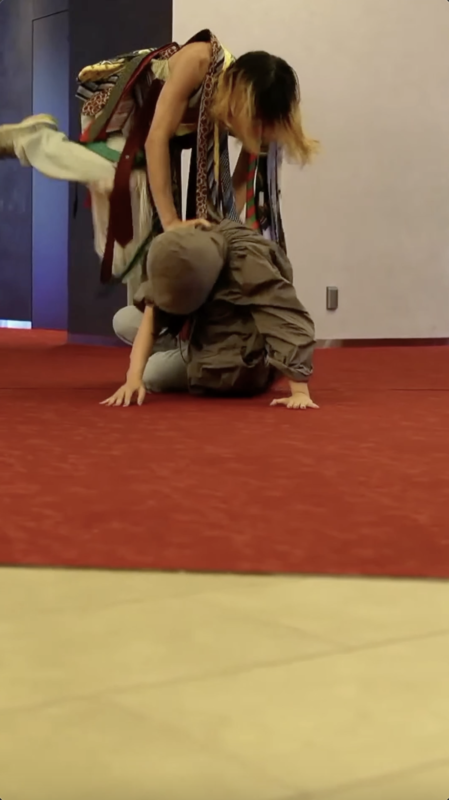
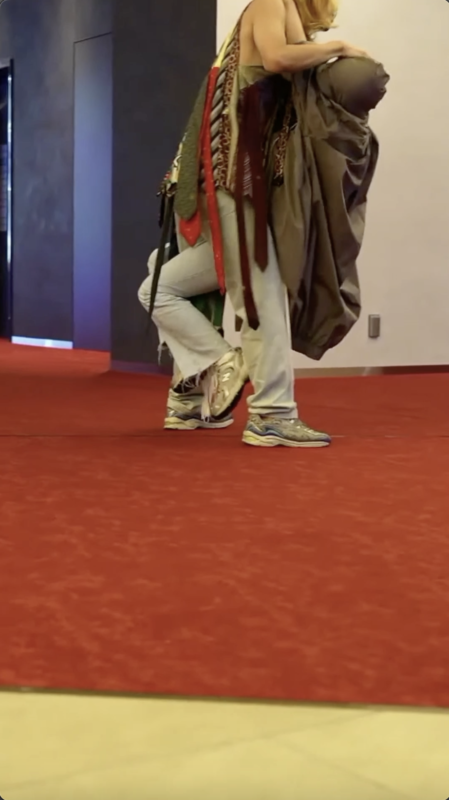
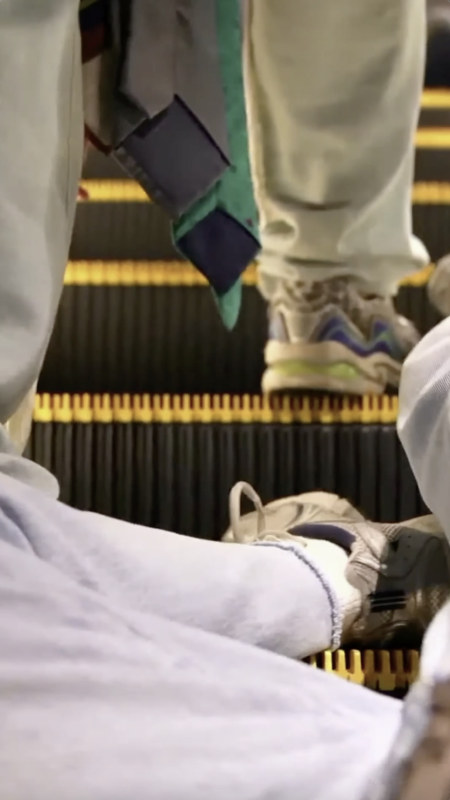
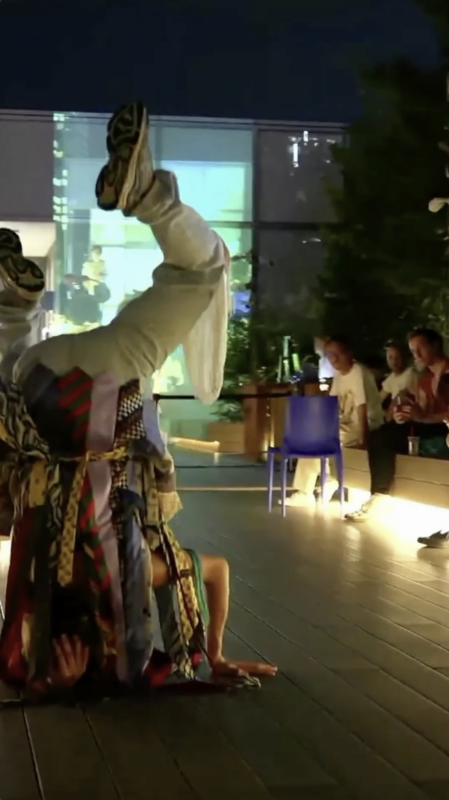
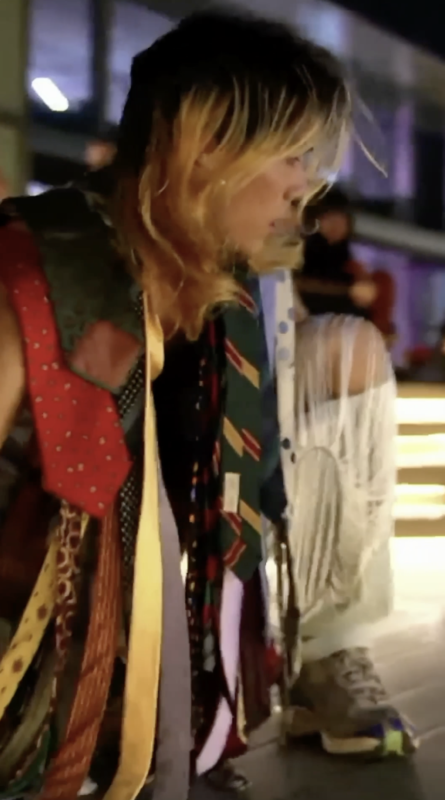
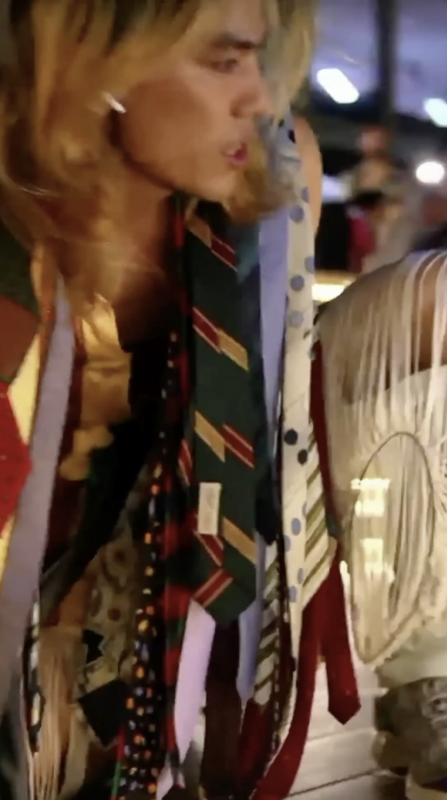
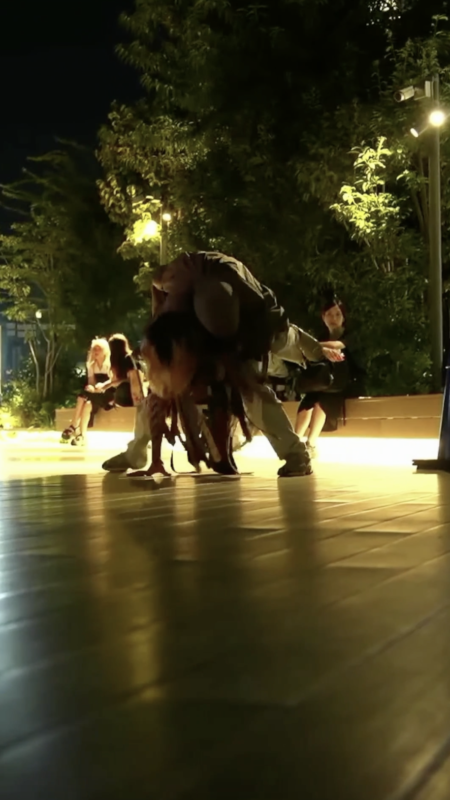
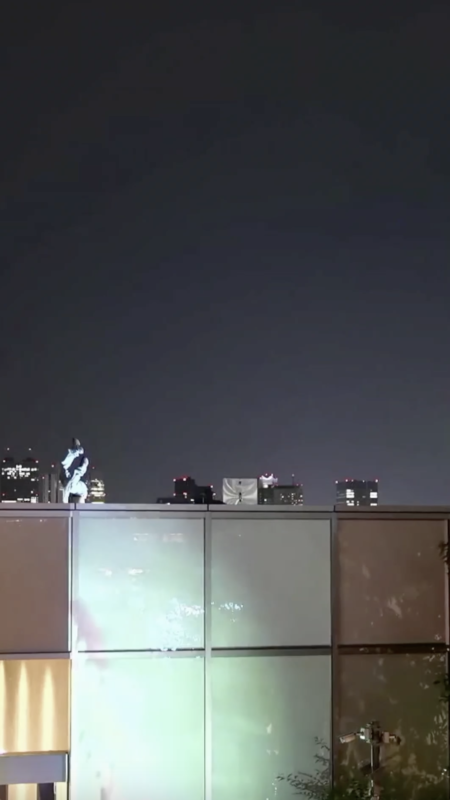
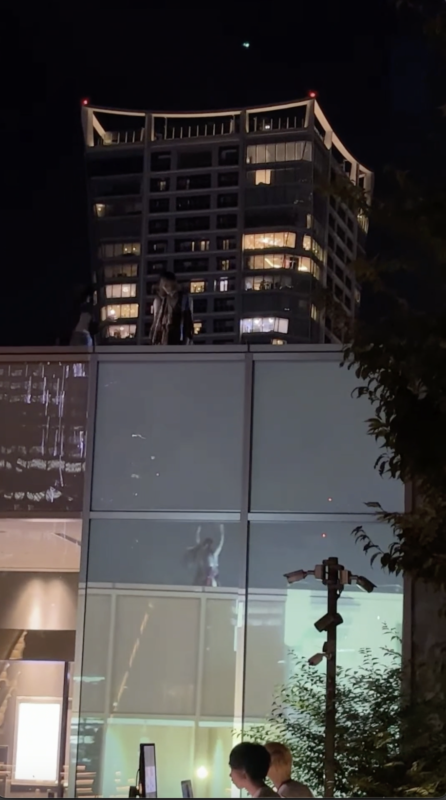
The work refers to questions raised by Happenings and environmental theater concerning the boundaries between stage and audience, performer and spectator, and theater and everyday life. At the same time, it incorporates methods associated with Shibuya’s club culture, particularly the real-time mixing of multiple images and sounds through DJ and VJ practices.
Spectators moved their attention between the cityscape, the screen, sound, the handout, and events occurring elsewhere in the building. Rather than requiring sustained focus on a single object, the work treated an “ADHD-like” mode of viewing—shifting between multiple simultaneous sources of information—as one form of perception within the contemporary city.
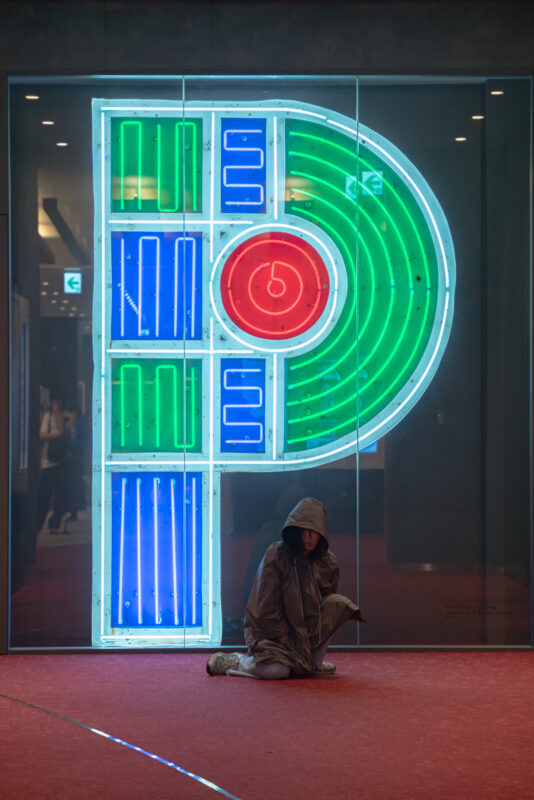
The title p.§. is pronounced “P.S.” The “p” refers to PARCO, while “§” signifies repetition within the work. Its pronunciation also evokes “P.S.,” a postscript added at the end of a letter or email.
By combining the structure of the ancient theater, PARCO’s original vision, contemporary Shibuya club culture, real-time video and sound, and multiple viewing routes, p.§. considers theater not as a fixed architecture, but as a temporary structure connecting bodies, places, media, and institutional systems.
The performance ended when PARCO closed for the day.
《p.§.(ピーエス)》は、渋谷PARCOのB2Fから10Fまで、バックヤードを含む建物全体と、その外側に広がる渋谷の街をひとつの劇場として捉えた、1時間のミクストメディア・パフォーマンスである。
作品の構想は、PARCOの創業者が、戦後の渋谷に「劇場を含んだお城」のような場所をつくりたいと考えていたというエピソードと、2023年のSHIBUYA PARCO ART WEEKのテーマが「パフォーミング・アーツ」であったことから始まった。PARCOの内部にある劇場で上演するのではなく、商業施設そのものを劇場として扱うことが作品の起点となった。
主な鑑賞場所は10Fの屋外空間である。古代ギリシャのディオニュソス劇場を参照し、屋外階段を客席、その前方を舞台、さらにその背景として実際の渋谷の街を配置した。観客は、都市の風景とパフォーマンスを同じ視野のなかで鑑賞した。
パフォーマンスはB2Fから始まり、店舗、通路、階段、バックヤードなどを通過しながら、一階ずつ10Fへと上昇した。各階では同じ台詞と出来事が反復されたが、場所、周囲の人々、音、照明、店舗の状況などが異なるため、同じ出来事が毎回異なる環境のなかで繰り返された。
各階の様子は複数のカメラによってリアルタイムで中継された。PARCO館内の防犯カメラの映像も用いられ、映像作家・鈴木創大がVJの技術によって複数の映像をその場でミックスし、10Fに設置された約7メートルのスクリーンに投影した。
パフォーマーの台詞はLINE通話を通じて10Fへ送られ、各階の環境音とともに、サウンドアーティスト・小松千倫がDJの技術を用いてリアルタイムで構成した。10Fでは、渋谷の実景、館内のライブ映像、遠隔地の声や環境音、実際にその場で起きている出来事が同時に提示された。
観客には、各階でパフォーマンスが行われる時間と場所を記したタイムラインが配布された。10Fで中継映像を見るだけでなく、タイムラインを参照しながら館内を移動し、実際のパフォーマンスを直接見ることもできた。そのため、作品全体を単一の視点から見ることはできず、観客ごとに異なる鑑賞経路が生まれた。
本作の実施にあたっては、渋谷PARCOおよび各テナントとの綿密な調整が行われた。営業中の商業施設にB2Fから10Fまでの上演動線をつくり、店舗、バックヤード、防犯カメラ、営業時間など、既存の施設運営とパフォーマンスを共存させることも作品の構成要素となった。
本作は、ハプニングや環境演劇以降に扱われてきた、舞台と客席、演者と観客、劇場と日常の境界という問題を参照している。同時に、DJやVJによって複数の音や映像をリアルタイムに編集する渋谷のクラブカルチャーも、作品の方法として取り入れた。
観客は、実景、スクリーン、音、ハンドアウト、館内の別地点へと注意を移動させながら作品を鑑賞する。ひとつの対象に集中するのではなく、複数の情報のあいだを行き来する「ADHD的」な鑑賞方法を、現代の都市における知覚のひとつの形式として扱った。
タイトル《p.§.》は「ピーエス」と読む。“p”はPARCOを示し、“§”は本作において反復を意味する。また、その発音は、手紙やメールの最後に書き加えられる「P.S.=追伸」も意味している。
古代劇場の構造、PARCO創業時の構想、現在の渋谷のクラブカルチャー、リアルタイム映像と音響、複数の鑑賞経路を重ねることで、《p.§.》は劇場を固定された建築ではなく、身体、場所、メディア、制度を一時的に接続する形式として捉えた。
パフォーマンスは、PARCOの閉館時間とともに終了した。
Performance Direction: Ikumi Yang
Performance: Asahi Ishikawa
Music: Kazumichi Komatsu
Video: Sota Suzuki
Costume: Koji Oyamada
Project Manager: Yoshiko Kurata
Visual Image:Rench Kee